
Homework Takes Two Hours and Ends in Tears? Try This 30-Minute Routine
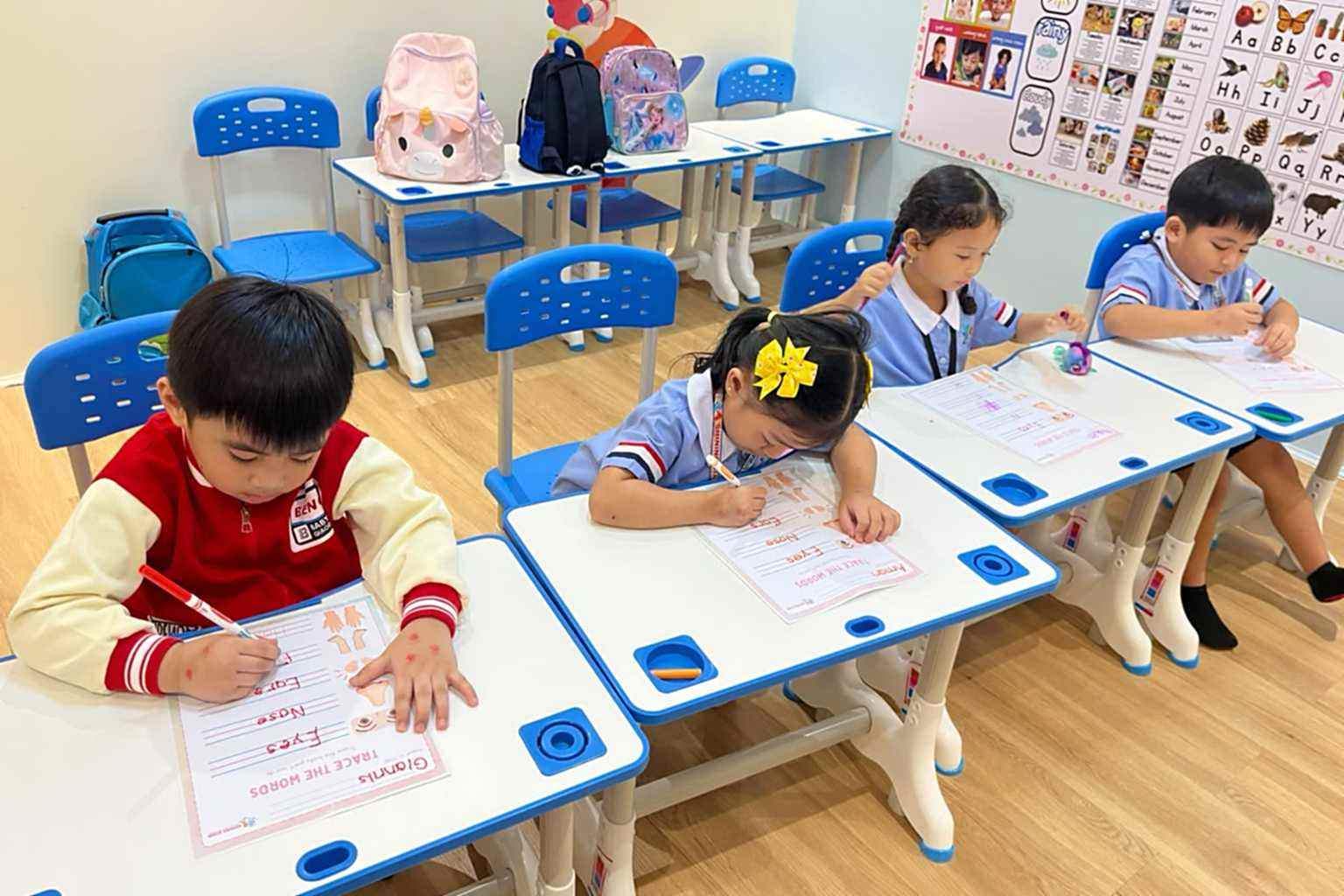

It’s 6pm. There’s a worksheet on the dining table, three items are done, and someone is crying. Some nights it isn’t the child.
Ask around any barangay in Quezon City and you’ll find mothers who have fought this since Grade 1 and accepted it as the price of a school-age kid. It isn’t. A workable homework routine for kids runs about thirty minutes, and most of what eats the other ninety isn’t homework at all.
Two Hours at the Table Is Almost Never Two Hours of Work
Time it once, honestly. Time the pencil, not the evening. You’ll find twenty minutes of writing buried inside a hundred minutes of other business. A pencil sharpened that didn’t need it. Two trips to the bathroom. One long argument about page 42 versus page 43.
Calling that laziness has never made an evening shorter. Avoidance is information. Read it that way and the goal stops being “make him concentrate” and turns into something you can build: work small enough, and an ending certain enough, that stalling stops paying off.
Four Things That Stretch One Worksheet Into a Whole Evening
The work is genuinely too hard. A child who can’t do item four will almost never say so. He’ll get a drink instead. Stalling protects him from finding out, in front of you, that he can’t.
He’s also wrecked. Up at half past five, in school by seven, home after whatever Commonwealth did that afternoon. Twelve hours on duty. You wouldn’t do hard thinking then either.
Then there’s the setting. TV going in the sala, phone beside the notebook, a younger sister driving a truck across the page, all on the table where the sabaw is about to land.
The fourth one stings. Somewhere along the way you stopped being the helper and became the enforcer, so every session is two people on opposite sides of a table. Nobody thinks well during a power struggle.
The 30-Minute Homework Routine for Kids, Step by Step
Same shape every night. The sameness matters more than any single step in it.
- 5:30, decompress. Merienda, tsinelas off, run around, shout a bit.
- 6:00, the two-minute review. He reads out what he’s got and picks the order.
- 6:02, a hard fifteen-minute block. Timer where he can see it, phone in another room.
- 6:17, five minutes off, standing up. Not a screen.
- 6:22, a second block of ten minutes. Hardest thing left goes first.
- 6:32, stop. Finished or not.
The snack and the running around aren’t a reward. They’re what makes the next thirty minutes possible. Never go straight from tricycle to table.
That two-minute review looks like nothing and carries a lot. He lists the tasks out loud and picks the order himself. The second a child decides what comes first, the homework becomes his instead of yours.
Fifteen minutes is short on purpose. Short enough that a child who hates homework can believe in it, long enough to get real work done. The visible timer changes the arithmetic: the minutes he burns are his. Then a real break, on his feet. A screen swallows five minutes and takes twenty more.
The Rule You Don’t Break, Even When You Want To
At 6:32 you stop. Mid-item, half the page blank, doesn’t matter.
Parents fight me on this, and it’s the part that makes everything else work. A child stalls because he believes the table has no exit, that the evening runs until the sheet is done, so speed buys him nothing. Give him a real ending and that flips.
Unfinished homework is not a disaster. Write two lines in the notebook: “We worked 30 focused minutes and reached item 6. The word problems were hard for him.” That tells his teacher more than a sheet finished at 11pm ever will. She can’t see your dining table.
Sit Nearby. Don’t Hover.
Be in the room, and be boring. Fold laundry, scroll quietly. He needs you reachable, not watching.
Hovering does two things and both are bad. It tells him you don’t trust him alone with a worksheet, which he will believe. And it puts you close enough to correct in real time. Say “that’s wrong” while the pencil is moving and his thinking stops dead. He’s watching your face now, not the page.
Check at the end, all at once. What’s right first, then the two worst errors. Leave the rest.
What to Say When He’s Stuck
The instinct is to ask “what’s the answer?” or, by 8pm, to just supply it. Try this instead: “Show me the part where you got lost.”
It sends him back into the question rather than out of it. Half the time he finds the spot himself while his finger is still moving. When he doesn’t, you know what to teach, which beats knowing he got it wrong. Keep a second line ready: “What did your teacher do first?”
The 9pm Rescue That Costs the Most
It’s late, he’s crying, you’re finished, four items left. So you take the pencil and do them. Anyone who claims never to have done this is lying.
The harm is quiet, which is why it repeats. His teacher gets a sheet saying this child understands, so she moves on, and the gap that caused tonight’s tears widens. Meanwhile he learns the only lesson in the evening: hold out long enough and the work becomes somebody else’s.
Stop instead of rescuing. Two lines to the teacher, bag packed, bed. Then move tomorrow’s session half an hour earlier. A 9pm homework problem is usually a 6pm scheduling problem in a costume.
When It’s Not the Routine, It’s a Gap
Run it properly for two or three weeks. Not four good nights and a collapse. If homework is still a war after that, the routine isn’t what’s broken. Something under it is.
Usually it’s reading. A child who decodes slowly spends everything on the words and has nothing left for the question, which is why maths word problems fall over first. Sometimes it’s number sense, all steps memorised and no idea what the numbers mean. Handwriting speed does it too. If forming letters still takes effort, copying two sentences costs him what a page costs the girl beside him.
A better timer won’t touch that, and a class of forty can’t either. It gets fixed one to one. Shining Tutorials covers Math, English, Reading, Writing and Homework Assistance from preschool through grade school, one child at a time. We’re not aiming for a tutor he keeps forever. We’re aiming for a child who can run those thirty minutes on his own.
Not sure whether this is a routine problem or a real gap? The signs that a child needs a tutor are worth reading, along with what changes for a child who’s been struggling in school.
Come and Talk to Us
Both campuses are in Quezon City, at West Fairview and on Commonwealth Avenue at Pearl Drive. Call, or send us a message, and tell us what your evenings look like.
📞 0966-401-6118
📞 0956-268-2674
Questions Parents Ask Us About This
My child has homework in five subjects. Thirty minutes can’t cover that.
Some nights it won’t, and thirty focused minutes still finishes more than two distracted hours. On heavy nights add one extra ten-minute block after a proper break. Never stretch the block itself.
What if he refuses to start at all?
Shrink it until refusing looks silly. Five minutes, one item, timer on the table. Most children will do five minutes to prove a point, and once the pencil moves the block runs full length.
How old before he can do this without me in the room?
A Grade 1 child needs you nearby throughout. By Grade 4 or 5 many can run their own timer and call you in only when stuck, provided the homework routine for kids in your house has stayed the same long enough to feel automatic.
The Short Version
Two hours at the table is twenty minutes of work in a bad disguise. Make the session small and make the ending non-negotiable. Let him pick the order. Then sit close and stay out of it.
Give it three weeks. If the evenings soften, you’ve found your routine. If they don’t, you’ve learned something no timer can tell you.