Meltdown at the Mall: What to Do When Your Toddler Has a Tantrum in Public

Toddler tantrums in public always happen in the worst place. The checkout line at the supermarket, with six people behind you. The middle of the mall during a Christmas sale. A relative’s house, in front of the tita who already thinks you are too soft. Your toddler wanted the toy, or the other cup, or to walk instead of being carried, and now they are on the floor screaming.
Everyone is looking. You can feel your face getting hot. And you have about four seconds to decide what to do.
This post is for that moment. Why toddlers have tantrums, what to actually do when one starts in public, what tends to make it worse, and how to make the next one less likely, especially with the busy Christmas season coming.
First: Tantrums Are Normal
Tantrums are one of the most common parts of toddlerhood. They usually start somewhere around 18 months, peak between two and three, and become less frequent as children’s language improves, typically by around four.
A tantrum is not a sign of bad parenting, and it is not a sign of a spoiled child. It happens because of how a toddler’s brain is built at this stage.
The part of the brain that handles big feelings is working at full power. The part that helps manage those feelings, calm down, wait, and think about consequences is still very early in development and will keep developing for years. So a toddler feels frustration, disappointment and anger at full adult strength, but with almost none of the tools adults use to cope.
Add the fact that most two-year-olds can’t yet explain what they want in words, and you have the recipe for a meltdown.
What Usually Sets Them Off
Most tantrums have a trigger, and in public places the same few come up again and again:
- Hunger. A hungry toddler has almost no patience.
- Tiredness. Errands that run into nap time are the classic cause.
- Too much noise and stimulation. Malls in November and December are loud, bright and crowded. Many toddlers simply get overwhelmed.
- Being told no. Especially to something they can see and touch, like a toy on a shelf at eye level.
- Transitions. Leaving the playground, leaving the toy section, getting back into the car seat.
- Wanting independence. “Me do it” is a big part of being two. Being carried, buckled or hurried can trigger it.
Knowing the trigger won’t stop every tantrum, but it helps you plan, and it helps you stay calmer when one starts.
What to Do When a Tantrum Starts in Public
1. Keep your child safe
If they are near a road, an escalator, glass shelves or a crowd, move them somewhere safer first. You can pick them up calmly and carry them to a quieter corner, a bench or even outside. Safety comes before everything else.
2. Stay calm, or at least look calm
This is the hardest part. But a toddler in a meltdown takes their cue from you. If your voice gets louder and sharper, theirs usually does too. Lower your voice, slow down, breathe out. You don’t have to feel calm to act calm.
3. Say less
Long explanations don’t reach a child who is mid-tantrum. They can’t process them. Use a few simple words: “You’re angry. You wanted the toy. I’m here.” Then stop talking.
4. Name the feeling
Naming what your child feels helps them start to connect the feeling to a word. “You’re so disappointed.” “That made you really mad.” It doesn’t mean you are giving in. It means you understand.
5. Hold the line kindly
If the tantrum is about something you said no to, keep it a no. Giving in once a tantrum starts teaches the child that tantrums work, and you will see more of them. You can be warm and firm at the same time: “I know you want it. We’re not buying it today.”
6. Wait it out
Some children want to be held. Some don’t want to be touched at all and will push you away. Stay close either way so they know you’re there. Most tantrums pass within a few minutes, even if it feels much longer.
7. Ignore the audience
Easier said than done. But most of the people watching are parents who have been exactly where you are. The ones judging you probably don’t have toddlers, or have forgotten. Your child matters more than strangers’ opinions.
What Usually Makes It Worse
- Shouting or threats. They raise the emotional temperature and rarely end the tantrum faster.
- Bribes in the middle of a tantrum. “Stop crying and I’ll buy you ice cream” works today and teaches the lesson you don’t want to teach.
- Shaming. “Look, everyone is laughing at you” adds embarrassment to a child who is already overwhelmed.
- Reasoning too much. Save the explanation for later, when they are calm and can actually listen.
- Handing over a phone. It may stop the noise, but it teaches that a meltdown leads to screen time. Our post on screen time for 2 to 4 year olds goes into this in more detail.
After the Tantrum
Once your child has calmed down, reconnect. A hug, a drink of water, a quiet minute. You don’t need a long talk. For an older two- or three-year-old, you can keep it very short: “You were really upset. Next time, you can say ‘I’m mad’ and I’ll help.”
Then move on. Don’t keep bringing it up for the rest of the day. Toddlers recover fast, and so should you.
And be kind to yourself. If you lost your temper too, that’s human. Apologise simply if you need to. That teaches your child something important about repairing things after a hard moment.
How to Prevent the Next One
You can’t prevent every tantrum. But a few habits make them less frequent, especially during the busy holiday season.
- Plan errands around naps and meals. Go after your child has slept and eaten, not right before.
- Bring snacks and water. Always. A hungry toddler in a long queue is a tantrum waiting to happen.
- Tell them what’s going to happen. “We are going to buy rice and eggs, then we are going home. We are not buying toys today.” Toddlers cope better when nothing is a surprise.
- Give them a job. Holding the list, putting fruit in the bag, finding the bananas. A busy toddler is a calmer toddler.
- Offer small choices. “Do you want to walk or ride in the cart?” Choices give them some control, which is often what they’re fighting for.
- Warn before transitions. “Two more slides, then we go home.” A heads-up makes leaving much easier.
- Keep trips short. If you can, leave your toddler at home for long shopping trips during the Christmas rush.
When to Talk to a Doctor
Most tantrums are a normal part of growing up. It’s worth talking to your paediatrician if:
- Tantrums happen many times a day, most days
- Your child regularly hurts themselves or others during them
- They often hold their breath until they faint
- Tantrums are still frequent and intense after age four or five
- You are worried about your child’s speech, hearing or development
Trust your instinct. You know your child best.
How Play School Helps
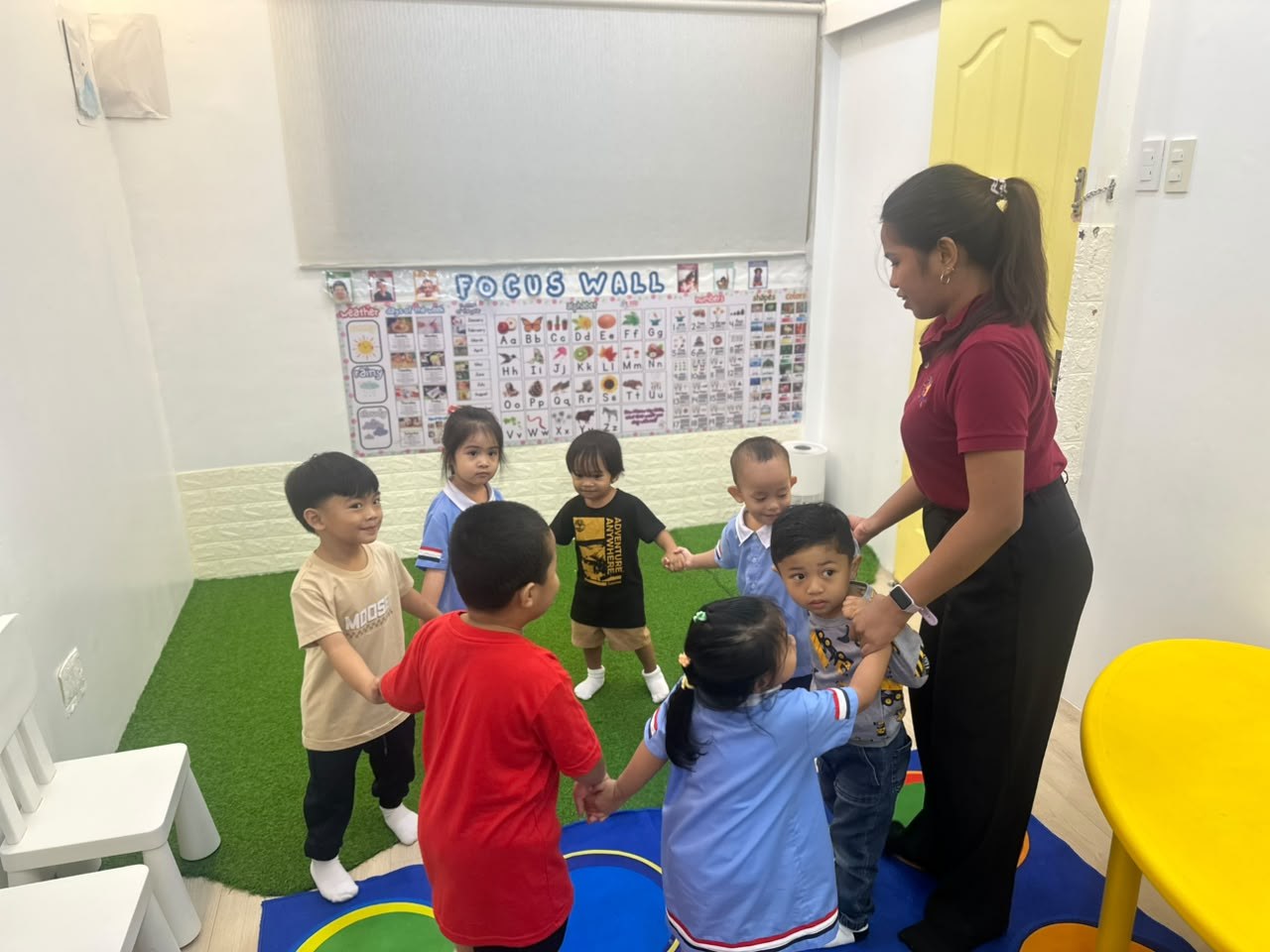
A good play school won’t make tantrums disappear. But a regular routine, time with other children, and teachers who calmly name feelings every day all help toddlers learn how to handle frustration a little better each week.
Children learn a lot by watching each other. They see a classmate wait their turn, or ask for help instead of grabbing, and they start to try it too. It’s the same reason a child who melts down at home can sometimes manage beautifully in class. We wrote more about this in what your toddler actually learns in a day of play school.
If you’d like to see how our classes handle the everyday ups and downs of being two and three, you can look at the classes we run at our Fairlane and Pearl Drive branches in Quezon City.
📞 0966-401-6118
📞 0956-268-2674
Or send us a message to ask about a trial class.
Questions Parents Ask
At what age do tantrums usually stop?
They usually become much less frequent by around age four, as children’s language and self-control improve. Occasional meltdowns can still happen when a child is very tired or upset.
Should I ignore my child’s tantrum?
Ignore the behaviour, not the child. Stay close and keep them safe, but don’t argue, bargain or give in. Once they calm down, reconnect warmly.
Is it okay to leave the store in the middle of a tantrum?
Yes. Taking your child somewhere quieter, like the car or a bench outside, is often the kindest thing for both of you.
Why does my child have tantrums with me but not with the yaya or at school?
Very common. Children often save their biggest feelings for the person they feel safest with. It usually means they trust you, not that you are doing something wrong.