
My Child Reads Well but Doesn’t Understand: Why It Happens
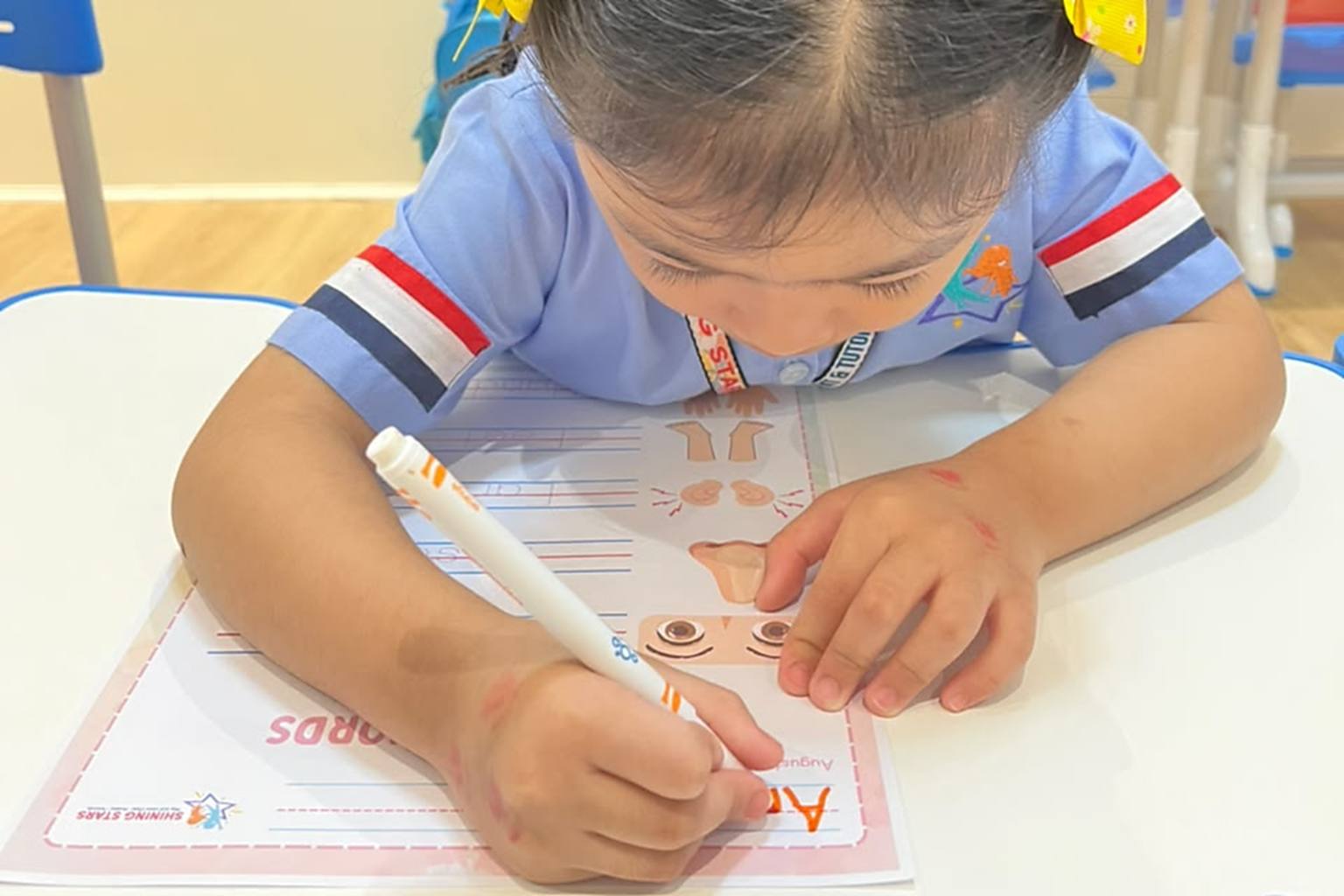

Your Grade 2 reads the page out loud like a tiny news anchor. Every word correct, decent expression, barely a stumble. You close the book, ask “So what happened in the story?” and she looks at you the way she’d look at a math problem in Russian. Nothing. If your child reads but doesn’t understand what just came out of her own mouth, you’re not imagining it, and she isn’t being lazy.
It confuses parents because the child sounds like a strong reader. Teachers hear her and smile. Lola brags. Then the comprehension worksheet comes home with three out of five wrong.
What It Means When Your Child Reads but Doesn’t Understand
Reading is two jobs at once. Decoding turns squiggles into sounds and sounds into words. Comprehension builds meaning out of those words, the way she builds meaning when you tell her a story at dinner.
A child can be excellent at one and weak at the other. Decoding gets taught. Comprehension mostly grows, out of talk and stories and knowing things about the world. When a page comes out perfectly and nothing sticks, the machinery is fine. The meaning side isn’t being fed.
All Her Brainpower Is Going Into the Words
Watch how she reads, not just whether she gets the words right. Slow? Word. By. Word. Flat, with a tiny pause before anything longer than five letters? She’s decoding accurately, but it’s costing her everything she has.
It’s like driving Commonwealth in your first week with a licence. You arrive, but you couldn’t name one thing you passed, because every scrap of attention went into staying in the lane. A child sounding out “b-r-o-k-e-n” three times has nothing left to wonder who broke it.
That’s the fluency bottleneck, and it’s why expression matters more than it looks. Expression is proof meaning is arriving while she reads. A robot voice means it isn’t.
The Words Are English but the Meaning Is Missing
She can say “harvest” without knowing what a harvest is. Decoding doesn’t require understanding, which is what makes this so easy to miss.
In plenty of homes around Fairview and Novaliches, the family talks in Tagalog or a comfortable mix while school runs in English. The child sounds fine in class. But her textbook is quietly a second-language text, stuffed with words she’s never heard in conversation: chores, meadow, stubborn, borrowed. Miss five of them in one paragraph and the whole thing turns to noise.
The other gap is knowledge, not vocabulary. A passage about a boy building a snowman is hopeless if you’ve never seen snow or felt cold. She isn’t missing words there. She’s missing the picture the writer assumed she had.
She Was Taught to Guess, and Guessing Got Her This Far
Some children learn to read by memorising whole words on flashcards and sight-word lists. It works beautifully for a while, because kinder books are short and the pictures do half the work.
Grade 2 is where that runs out of road. Sentences lengthen, pictures thin out, and “horse” versus “house” starts to matter. Listen to her errors. If she reads “pony” for “horse,” she isn’t decoding, she’s predicting from the first letter and the illustration, and a prediction machine produces a fluent page that means something else entirely. Our post on how children get ready to read covers what early phonics should look like.
Nobody Ever Told Him He Was Supposed to Picture It
This one surprises parents most, and it’s the cheapest to fix. Lots of children genuinely don’t know reading is supposed to produce something in their head. They think the job is saying words right and stopping at the full stops.
So say it out loud tonight: “When you read, you’re making a movie in your head. If the movie stops, go back to where it stopped.” Some children fix half the problem in a week from that one sentence.
A Ten-Minute Test You Can Run Tonight
Take a short paragraph from her reader, something she hasn’t seen. She reads it out loud once, then closes the book. Ask three questions, one of each type, and watch which one breaks.
Start literal, answer sitting right there in the text. “Where did the dog go?” If she can’t manage that, she isn’t holding the words long enough to keep them. That’s the bottleneck: working memory fully booked with decoding, nothing left to store.
Next, inference, where the answer is implied but never stated. “Why do you think the boy was scared?” A child who nails the literal one and blanks here is reading words without thinking about them. That’s a habit, and habits move fast.
Last, vocabulary. Pick a word from the passage and ask what it means. A blank stare points at vocabulary and background knowledge, and it’s never just that word. It’s twenty, across every subject. Run the test twice on different nights. Tired children fail everything.
Five Fixes That Work at the Kitchen Table
- Read aloud to her, above her reading level. Fifteen minutes of a book she couldn’t decode herself feeds vocabulary and knowledge without the decoding tax. Free, and the most useful thing here.
- Stop and say it back. At the end of each paragraph she closes the book and tells you what happened, in her own words. Just the gist.
- Pre-teach two or three hard words. Skim the passage first, pick what she won’t know, explain it using her actual life. Two minutes saves an hour of crying.
- Ask what happens next, and why. Stop halfway, have her predict, then ask what in the story made her think so. The “why” is the whole exercise.
- Re-read the same short passage three times. First read is decoding, second is smoother, and by the third she has attention spare to hear the story.
When Home Practice Isn’t Enough Anymore
If a month of steady effort is moving things, keep going. Three signs say it’s time to bring someone in.
Avoidance is the first. She hides the book, needs the toilet, suddenly remembers homework in another subject. Children dodge whatever makes them feel stupid, and once reading feels that way, drilling at home only hits the wall harder.
Second, it spreads. Math word problems go wrong even though she can do the computation. Science answers miss the question being asked. When the same weakness turns up in three subjects, it stopped being a Reading class problem a while ago.
Third is the nightly fight. If homework has become an hour of tears for both of you, the relationship takes the damage, and you can’t be her mom and her reading teacher every night. Our post on the signs a child needs a tutor goes deeper into where that line sits.
Here’s the part a regular classroom can’t solve, and it isn’t the teacher’s fault. When a child reads but doesn’t understand, the fix is someone sitting beside her, catching the exact moment meaning drops out, and backing up. Class size makes that impossible. That’s the point of Shining Tutorials, our one-on-one tutorial programs in Quezon City, preschool through grade school, covering reading and phonics, English comprehension and grammar, plus homework assistance, aimed at a learner who eventually doesn’t need us. The week-to-week version is in how tutoring helps a struggling child.
Talk to us about your child’s reading
📞 0966-401-6118
📞 0956-268-2674
Questions Parents Ask Us
My child reads faster than her classmates. Isn’t that a good sign?
Not on its own. Speed without comprehension usually means autopilot decoding, or skimming. Have her stop after each paragraph and say it back. A fast reader who can’t is moving her eyes, not reading.
Should I stop letting him read in Tagalog or Filipino?
No. Comprehension skills built in one language carry over. A child who follows stories in Filipino already has the thinking machinery, and what’s missing is English vocabulary.
How long before I see improvement?
Fluency and habit changes often show inside four to six weeks of steady practice. Vocabulary and background knowledge take longer, because you’re filling in years of missed exposure. Willingness improves before scores do. Grade 2 is not too early to start, either. Through Grade 3 children learn to read, and after that they read to learn, with every subject assuming comprehension is already there.
The Short Version
A child who reads well but doesn’t understand isn’t broken or lazy. Something between the words and the meaning isn’t connected, and the causes are ordinary: decoding that eats her attention, words she’s never heard, a world she hasn’t met, or nobody telling her to picture anything.
Run the three-question test tonight. Read to her above her level. If the wall doesn’t budge, ask early. We’re on Fairlane in West Fairview and at Pearl Drive along Commonwealth Avenue in Quezon City, and you’re welcome to get in touch and tell us what you’re seeing at home.