
Is My Toddler Ready to Hold a Pencil? Simple Signs to Check at Home
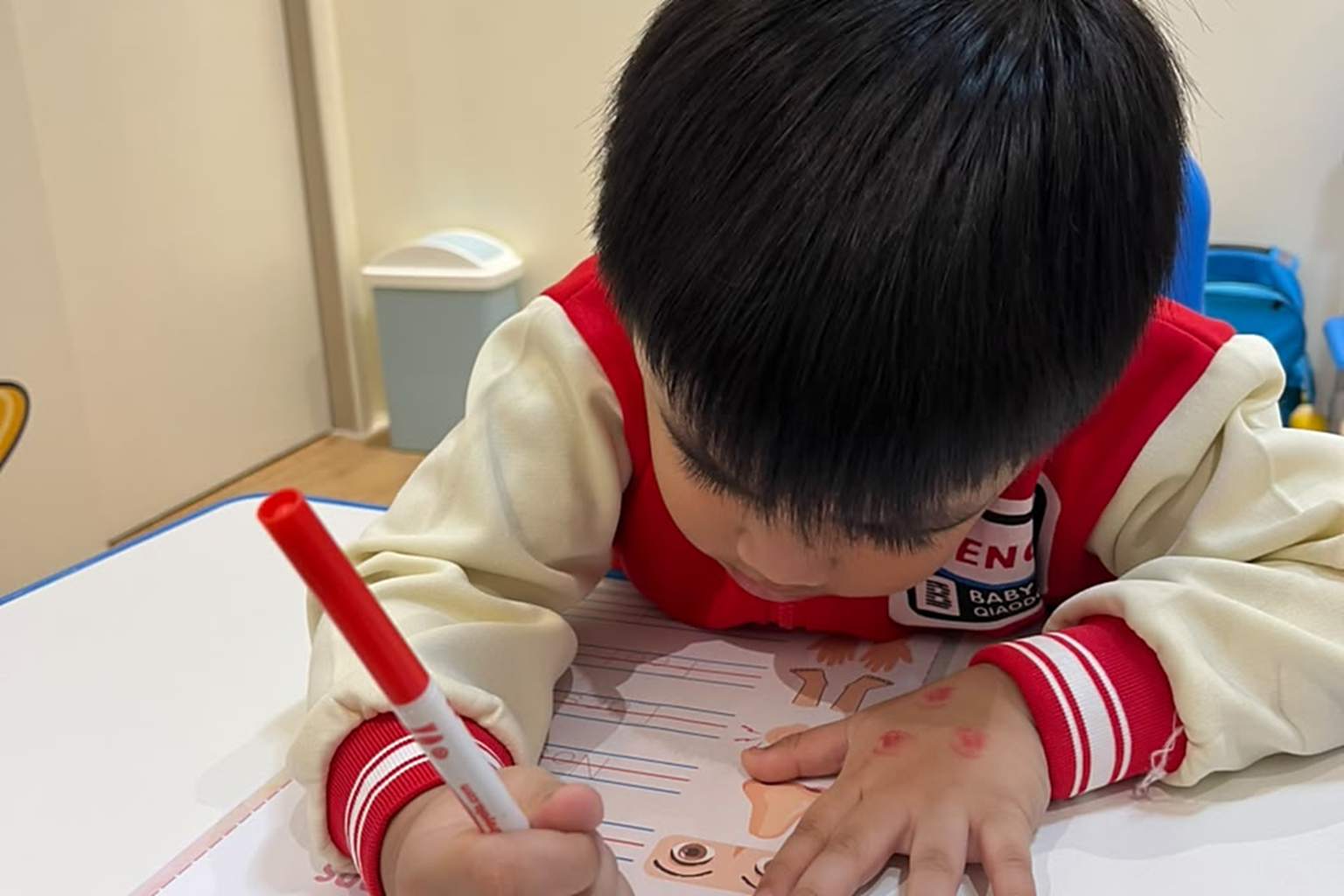

It usually starts at a birthday party. Your three-year-old is scribbling with a crayon held in a full fist, the way you’d hold a screwdriver, and a tita mentions that her apo has been writing her own name since she turned three. You smile politely. Then at 10pm you’re on your phone wondering whether your toddler is ready to hold a pencil.
Here’s what nobody says at the party. Grip is a hand strength question first and a writing question much later. A child who can’t twist open a bottle cap won’t hold a pencil well, however many tracing books you buy. The hand isn’t strong enough yet.
So before you spend on worksheets, run a few checks at home. Ten minutes, no cost.
Grip Comes in Stages, and You Can’t Skip One
Watch a one-year-old with a crayon. The whole fist closes around it, the thumb sits on top, and every mark comes from the shoulder swinging the arm. That’s the palmar grasp, and it’s right for that age.
Somewhere around two or three, the crayon shifts. Four fingers hold it, the tip points down at the paper, and the movement still comes from the elbow. Also normal. Not writing yet.
The mature tripod grip, the one you’re using right now, usually settles in between four and six. Pencil between thumb and index, middle finger propping underneath, small muscles doing the work. Plenty of sharp kids are closer to six and still write beautifully.
Push the tripod too early and the same thing happens every time. The child squeezes harder to make up for a weak hand, locks the wrist, presses until the crayon dents the page, quits after two lines. The pencil becomes the enemy. Undoing that takes months.
Is Your Toddler Ready to Hold a Pencil? Six Checks You Can Do at Home
None of these involve a pencil. That’s the point. Each tells you about the small muscles in the hand, and the thumb-and-finger separation a pencil quietly demands.
- Can she twist open a small water bottle or vitamin jar without you starting it?
- Can he tear paper into strips, both hands pulling in opposite directions?
- Can she cut along a thick straight line with safety scissors, even if she wanders off it?
- Can he thread big wooden beads, or dry macaroni, onto a shoelace?
- Can she pick up single grains of rice with just thumb and pointing finger?
- Can he press hard enough with a crayon to leave real colour, not a ghost of a line?
Then there’s the drawing sequence. Draw a vertical line and ask her to copy it, then a horizontal line, then a circle, then a cross. Children manage them roughly in that order, and one who can’t copy a circle won’t copy a letter B, since a B is a line plus two circles she hasn’t learned. If four checks are hard, the answer isn’t worksheets. It’s clay.
Handwriting and early reading run on separate schedules too. A child can be sounding out words long before her hand can form them, and the signs a preschooler is ready to read are a different checklist.
The Real Work Happens on the Floor, Not at the Table
Writing rests on a steady trunk and a steady shoulder. The shoulder holds the arm still so the wrist stays put, so the fingers can make tiny controlled movements. Wobbly shoulder, and the child compensates from the fist. Back to the death grip.
They build that stability by pushing weight through their arms. Crawling races down the hallway, even at four. Hanging off the monkey bars at the barangay playground. Carrying a small water jug to the sala. Squeezing a spray bottle to water the plants, which works the same finger muscles a pencil uses. All of it is pencil practice, and none of it feels like it.
Short, Fat and Broken Crayons Teach Better Than Long Thin Pencils
A crayon only an inch long physically cannot be held in a fist. There’s nowhere for the other fingers to go, so the hand sorts itself into a pinch without anyone nagging. Broken crayons aren’t a tragedy. Break them on purpose. Chalk snapped in half does the same job. Skip the plastic grip attachments, which suit children who already have the strength.
Tape the Paper to the Wall
Cheapest trick in early childhood, and hardly anyone uses it at home. Tape paper to a wall at your child’s eye level and let her draw standing up. Or hand her a whiteboard marker for the ref, which every toddler in Quezon City treats as a privilege.
A vertical surface forces the wrist back into extension, the position handwriting needs. It keeps the shoulder working. It also stops the elbow doing the job the fingers should be learning. Fifteen minutes a few times a week beats an hour hunched at a low table.
Tracing for Fun and Drilling Worksheets Are Two Different Things
Tracing is fine when it’s playful and short. A finger through a tray of flour. A dotted shape traced with a fat crayon while you chat about what it reminds you of. It ends because the child is done, not because the page is finished.
Drilling is twenty rows of the letter A, with correction, while the hand is still too weak to manage it. What that buys you is a child who writes A badly and now believes she’s bad at writing. Rebuilding willingness costs far more than teaching the letter did.
When Your Four-Year-Old Still Runs Away From the Pencil
Check first whether the avoidance is about the pencil or about the sitting. Some children draw happily for twenty minutes on the floor and refuse the same task at a table, because staying upright is the hard part. That’s a core strength signal.
Worth raising with your paediatrician: hands that tire after a minute of colouring, a fist grip that hasn’t budged past four and a half, no clear hand preference by five, or real distress at anything sticky. Those deserve a conversation, not a panic.
Mostly a reluctant four-year-old needs structure with low stakes. Short sessions, done consistently, with someone who can tell a weak hand from a stubborn one. That’s the shape of our Enrichment Program, eight weeks run as two batches of four, with writing practice built on tracing, tactile activities and letter formation alongside reading and group play. Eight weeks suits a family testing the water first.
Talk to Us About Where Your Child Is Right Now
We’re in West Fairview and on Commonwealth Avenue, and we’ll tell you honestly whether your child needs a programme or just more time with clay. Call or message us:
📞 0966-401-6118
📞 0956-268-2674
Questions Parents Actually Ask Us at the Gate
My child is three and still uses a whole fist. Is that a problem?
No. A fist grip at three is ordinary. What matters is whether the hand is getting stronger month by month. If she opens packets and squeezes a spray bottle better than she could three months ago, the grip will follow.
Should I correct the grip when I see it?
Correct the tool, not the fingers. Hand over a shorter crayon, move the paper to the wall, switch to chalk. The hand rearranges itself. Repositioning fingers over and over just makes children put the crayon down.
My child is left-handed. Does any of this change?
Sequence is identical. Tilt the paper the other way, seat her on the left side of a shared table so elbows don’t collide, and resist any relative who suggests switching her hand. Preference often isn’t settled until four or five.
He’s in grade school already and his handwriting is a mess. Too late?
Not at all, though the fix is different. Older children usually need targeted work on letter formation and speed rather than hand strength, which is what the one-on-one tutorial sessions handle.
The Short Version
Whether your toddler is ready to hold a pencil gets answered by her hands, not by the calendar and definitely not by your cousin’s child. Check the bottle cap. Check the scissors. Check whether she can copy a circle before you ask her to copy a letter.
Then go do the unglamorous stuff, which is climbing, carrying, squeezing and tearing, because that’s where grip is built. The writing arrives once the hand is ready. Keeping children interested long enough for that is most of what we do in Quezon City, across our programmes for toddlers and young learners. Break the crayons. Tape the paper to the wall tonight.