
Nursery, Playgroup, Kinder or Prep? What Each One Means and the Right Age for It
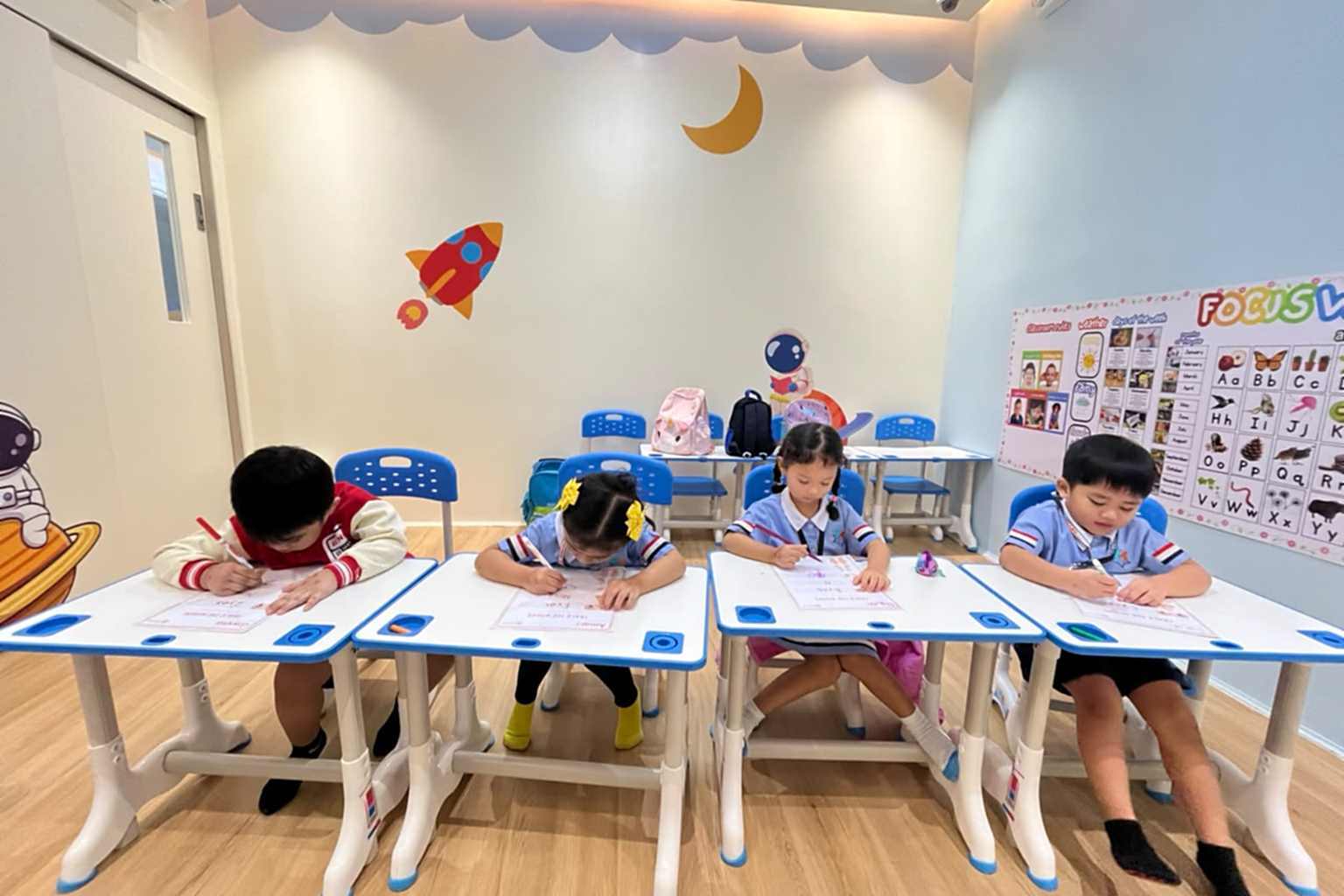

The enrolment form wants you to tick a level. The choices are Playgroup, Nursery 1, Nursery 2, Kinder and Prep, your child is three, and the campus two streets away calls the same class something else. If you’ve ever tried to work out the right nursery, playgroup, kinder or prep age for your own child and walked away more confused than when you started, the fault isn’t yours. These labels aren’t standardised in the Philippines. One centre’s Nursery is another centre’s Prep, and nobody sends parents a memo.
What doesn’t shift is the child in front of you. A two-year-old and a five-year-old need different rooms and different amounts of adult help, whatever gets printed on the certificate. So here’s each stage as it actually runs.
Playgroup or Play School: Roughly 1.8 to 3, and Nobody Is Reading
This is the first rung, and the one parents misread most. There are no academic goals here. None. If a play school promises you a reading toddler, treat that as a warning light rather than a feature.
The real curriculum is harder than phonics. Your toddler is working out how to be apart from you for a couple of hours and come out fine. She picks up that when the music changes it’s pack-away time, and that the blue chair isn’t hers by birthright. She also discovers that an adult who isn’t Mama, Lola or the yaya can hand her a simple instruction, and that following it turns out to be safe.
Sitting through four minutes of a story before wandering off counts as a win. Small stuff, and everything academic gets built on top of it.
Nursery: Roughly 3 to 4, Where Structure Sneaks In
Nursery is when the day starts having a shape your child can predict. Arrival, circle time, an activity, snack, goodbye. Letters and numbers show up now, but as play. Tracing an S in a tray of rice. Counting buttons before packing them away. Nobody is drilling.
Independence is the quieter goal. By the end of a decent nursery year most three- and four-year-olds can announce that they need the bathroom and lift their own bag off the hook without being told twice. Teachers weigh that more heavily than whether a child recognises the letter Q.
Kinder at 5: The Only Level the Law Insists On
Here’s the part with an actual rule attached. Kindergarten in the Philippines is compulsory, and it’s the required step before Grade 1. Children enter at five, subject to the age cutoff DepEd applies for that school year, which your school confirms at enrolment. Everything before Kinder is optional.
Read that twice if guilt has been sitting on you. A parent who never sent a toddler to playgroup has broken nothing. A parent who started at 1.8 hasn’t bought a guarantee either.
Kinder itself looks like school. Early reading, writing on real paper, seatwork, a longer stretch of sitting still. A five-year-old who has never been in a group can manage it. She just spends the first month absorbing the routine while her classmates absorb the lesson.
Prep, Pre-K, Junior Casa and Other Words Schools Made Up
“Prep” is the slipperiest word on any enrolment form in Quezon City. At some campuses it means the year after Nursery and before Kinder, so around four. Elsewhere it’s the year after Kinder, an extra pre-school year ahead of Grade 1, so around six. A few use Prep as their own name for Kindergarten.
Same word, three different children. Comparing centres by level name gets you nowhere.
When the Nursery, Playgroup, Kinder and Prep Age Bands Don’t Match Your Child
Birthdays are a rough guide. Readiness is the real one, and you can test it at home this week without paying for an assessment.
- Can she be apart from you for two hours with someone outside the family, without falling apart the whole time? Try it with a relative, not a stranger.
- Can he follow a two-step instruction? “Get your tsinelas and put them by the door.” Not once when he feels like it. Most of the time.
- Can she manage the bathroom, or at least tell somebody before it’s an emergency?
- Can he sit through five minutes of a story without needing to be held?
- Does she notice other children at all? Watching from a distance counts.
Three or four yeses and she’ll settle into the band her age suggests. One or two, and the stage below is the kinder choice, not the lesser one. A toddler parked in a room she can’t cope with learns that school is where she fails.
The November Baby Sitting Right on the Cutoff
Parents of a late-year baby have this conversation with us at every intake. The birthday lands just on the wrong side of the line, and the choice is hold back or push forward.
Pushing forward means being the youngest in the room for the next twelve years. At five that gap is enormous. At fifteen it’s nothing. The cost surfaces socially before it shows anywhere else, because the youngest is the one lagging half a beat behind the joking and the group games.
Holding back costs twelve months of tuition and some patience when a tita asks why your kid isn’t in big school yet. Give that in-between stretch a purpose instead of leaving it empty.
Four Questions That Cut Through the Names
When a centre’s level names match nothing you’ve read, drop the label and ask about the room. What ages sit in this class, youngest to oldest, and how many children with how many teachers? What does a typical day look like from drop-off to pick-up? How much of it has a child at a table holding a pencil? What should they manage by the end of it?
Group size is the number families forget to ask about, and it decides how much of the teacher any single toddler actually gets. Ours are published rather than promised. Our Classes page lists 12 students with 2 teachers for the toddler nursery levels. Ask whichever school you’re visiting for those same two figures, and notice whether they can answer without checking.
Watch the answers, not the brochure. A centre boasting that “our Nursery children finish the year writing in cursive” is telling you about its priorities, and it isn’t the selling point it sounds like. Worksheets photograph well, which is exactly why some places lean on them. Three-year-old hands aren’t built for it. The longer version of that argument sits in our piece on play-based learning against the traditional preschool approach.
Where Our Two Programs Sit on That Ladder
At Shining Stars Play and Learn Class in Quezon City, the Premium Play School Program covers ages 1.8 to 4, which spans playgroup straight through nursery. It lasts ten months, and every month has one theme. That theme carries the Language and Literacy work. It threads through Math and Science too, then surfaces at the Arts and Crafts table and in the Life Skills and Social Development half of the day.
A morning holds guided play and circle time. There’s dancing. A flag ceremony, reading aloud, painting, and an eating time that matters more than most parents expect. Real structure, no drilling.
If ten months feels like too much, or your little one needs a shorter runway first, our Enrichment Program runs eight weeks as two batches of four. It starts with what a classroom expects of you and how to look after your own things. Tracing and letter formation get their own slot, sitting alongside storytelling with picture books. Group activities close the gap for a kid who has never had to work beside anybody. Families pick it for the cutoff situation above, or as a trial before signing up for a whole year. Still weighing the timing? Our post on what age to start preschool goes deeper on that single decision.
Talk to us about which level fits your child
Tell us your child’s birthday and what she can do at home, and we’ll say honestly which program suits, even if the answer is wait a few months. Our campuses are in West Fairview and along Commonwealth Avenue.
📞 0966-401-6118
📞 0956-268-2674
Questions Parents Ask Us
Is playgroup required before nursery?
No. Nothing before Kindergarten is required here. Playgroup smooths those opening weeks, because the crying and the routine-learning already happened, but a latecomer catches up.
My child is four. Is that nursery or prep?
Depends on the school. Ask what ages fill each class instead of comparing names. At four you want a room where letters and numbers appear inside play.
Can my child skip kinder if she can already read?
Kindergarten is the mandatory step before Grade 1, so it isn’t skippable on paper. An early reader still gains plenty there, mostly around working in a group and handling a full school day.
We’re moving schools. Will the level names transfer?
Bring records showing your child’s age and what she covered, not just the level name. A school in Quezon City will place her by age and by what she can do.
The Short Version
Playgroup is about separation and routine. Nursery adds structure and self-help. Kinder at five is the required one. Prep means whatever a school decided it means, so ask. Every nursery, playgroup, kinder and prep age band you read is a guide, not a ruling.
Then look at your own child. If she can leave you for two hours and follow a two-step instruction, she’s ready for the stage her age suggests. If she can’t yet, she will be. A few months of waiting has never ruined anybody.