What Makes a Good Preschool Teacher? 5 Things Parents Should Ask About

Every school you visit will tell you its teachers are caring and dedicated. None of them will say otherwise. So that sentence tells you nothing, and you still have to choose.
Which teacher will be in the room with your two-year-old, and what do you actually know about her?
Parents tour schools and look at the building. The playground, the aircon, the wall displays, whether the CR is clean. All of that is worth checking. None of it is what your child will remember.
A toddler’s experience of school is almost entirely the person standing in front of them. Same room, same toys, different teacher, completely different year.
Here are five things worth asking about, and what a good answer sounds like.
1. Is she licensed, and in what
“Licensed teacher” isn’t one thing. A teacher trained in early childhood education learned how three-year-olds think, which isn’t the same training as someone prepared to teach Grade 4.
Both can be excellent. But a teacher who has studied early childhood won’t be surprised when a two-year-old cannot sit still for twenty minutes, because she knows that two-year-olds can’t sit still for twenty minutes. That expectation, set correctly, is most of the job.
Ask: what did the teachers train in, and does the school hire specifically for early childhood?
A school that is proud of its answer will give it quickly. One that changes the subject has told you something too.
2. Whether she is ever alone in the room
An assistant changes everything, because it means one adult can step out with a crying child while the class keeps running. Alone, she has to choose between the one child and the other eleven, and she will make that choice several times a week.
Ask whether there is a second adult, and ask what happens when one of them is absent.
The related question is the group size itself, which we covered separately in how many kids per teacher a play school should have. That post has the follow-up questions worth asking about ratios, and it is where we would start if you only have time for one.
3. What she does when a child falls apart
Every toddler class has a bad morning. A child cries for an hour, bites someone, refuses to leave a parent’s leg, wets themselves, throws a chair.
Ask what happens next. Not as an accusation, just as a question.
What you want to hear is something specific and calm. She sits with the child away from the group. She offers two choices instead of an instruction. She tells the parent the same day. She doesn’t leave a crying child alone to “tire themselves out.”
What you don’t want is a vague reassurance that it never happens. It happens everywhere. A school that claims otherwise either isn’t paying attention or isn’t telling you the truth.
4. How she tells you about the day
Your child is two. They won’t report back. Whatever you learn about school, you learn from the teacher.
Some schools send a short note home daily. Some message parents. Some do a proper sit-down once a term. Some send nothing at all unless there’s a problem.
None of these is wrong, but they suit different parents. A working parent who only sees their child at dinner needs more than a term-end meeting. Decide what you need and ask whether the school does it, before you enroll rather than after.
Ask: if my child had a hard day on a Tuesday, when and how would I find out?
5. How long she has been at the school
Teachers move, and that’s normal. But a school where the whole faculty changes every year is telling you something about how it treats its staff, and children feel that.
Toddlers attach to people, not institutions. A child who has spent two months learning to trust a teacher doesn’t transfer that trust to a replacement automatically. They start again.
Ask: how long have the teachers been here? A school with people who have stayed will usually be glad you asked.
What to watch on the tour
Questions get prepared answers. Watching doesn’t.
If you can, visit while a class is actually running, and look at three things.
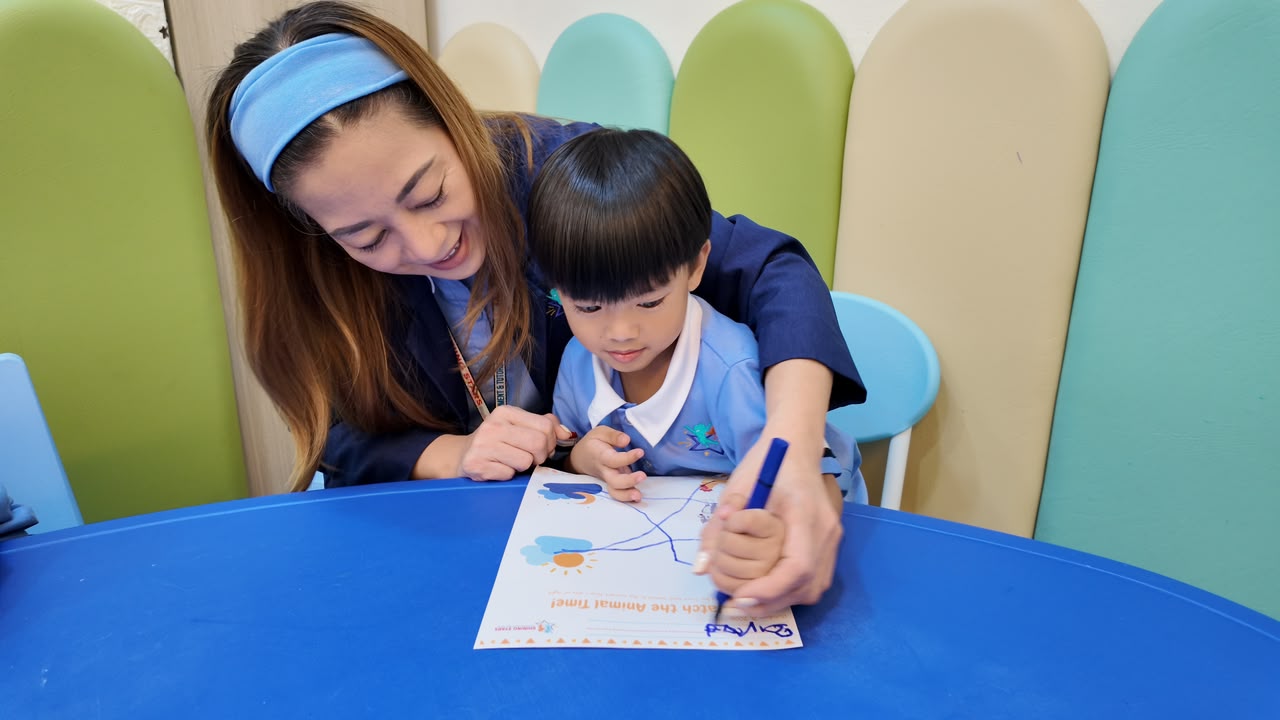
Does she get down to their level? Teachers of small children spend a lot of time crouching, sitting on the floor, kneeling to tie a shoe. A teacher who talks down at toddlers from standing height isn’t wrong exactly, but it tells you how she sees the job.
Does she use their names? All of them, easily, without checking.
What is her voice like when something goes wrong? Not when she is showing you the art corner. When a cup spills or two children want the same truck. That is the voice your child will hear.
The part nobody asks about
Ask how the school treats its teachers.
It feels like none of your business, and it’s completely your business. A teacher who is overworked, underpaid or unsupported can’t give a room of toddlers the patience they need, no matter how much she cares. Patience is a resource and it runs out.
You won’t get a full answer. But you will learn something from how the question lands.
At Shining Stars
Our classes are handled by licensed teachers, and we keep the groups small enough that two adults are in the room with a class of ten to twelve children.
You can meet our teachers here, and if you’d rather see them at work than read about them, our free trial class is the better version of that. Watch a session, then decide.
If you are still working out which school suits your family, our guide on how to choose a play school in Quezon City covers the rest of the checklist.
A building is easy to judge in a ten-minute tour. The person is harder, and she is the part that matters. Go back for a second visit.