
When Your Toddler Suddenly Doesn’t Want to Go to School Anymore
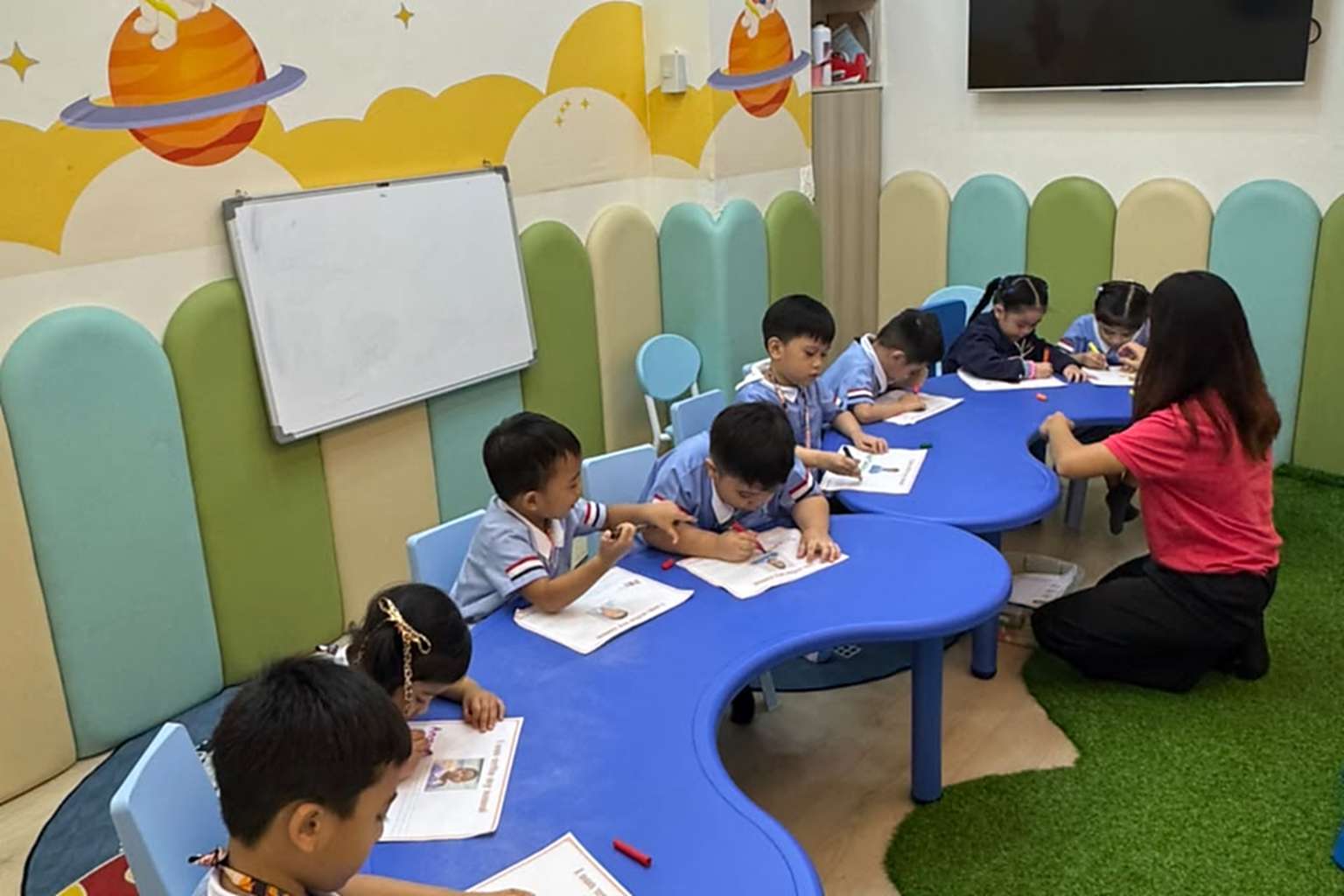

Three weeks ago she was pulling you toward the gate. This morning she’s wrapped around your leg in the parking area, crying the cry that makes strangers turn around, saying “ayoko na.”
When a toddler doesn’t want to go to school after weeks of happy mornings, the first thought is always the worst one. Something happened in there. Someone was mean to her. We picked the wrong place.
Usually none of that is true. This is one of the most predictable things in early childhood, and it lands between week three and week six. Teachers in Quezon City see it every intake. You may know the shape of it from our post on preschool separation anxiety. This is the sequel nobody warns you about.
The Honeymoon Runs Out Around Week Three
The first few days aren’t really school to a two-year-old. It’s a new room with new toys and a lot of adults being extra nice. In a toddler’s head it’s a place you visit, like the mall or lola’s house on a Sunday.
Then it happens again. And again. Somewhere in week three or four the penny drops: this isn’t a treat, this is Tuesday, and it will be Wednesday too, and apparently it keeps being Wednesday forever. That alone can blow up a gate that was fine last week. When a parent tells us drop-off has gone bad overnight, our first question is which week they’re on. Usually the answer is four.
What Usually Sets It Off
The trigger is rarely dramatic. It’s almost always something small from outside the classroom, and once you spot it the whole thing stops feeling sinister.
- A long weekend or a holiday break. Four days at home resets the clock, and now she knows what she’s going back into.
- A new baby, or a lola who went home to the province. School becomes the place where she isn’t allowed to keep watch.
- Illness. A week of fever and cartoons in your bed is a hard act to follow.
- A wrecked nap or a late bedtime. Two nights of 10pm sleep show up at 7:30am as a refusal.
- One small social sting. Somebody took the yellow car. Somebody said “hindi ka kasama.” Adults forget it by lunch. A two-year-old files it under “that place.”
- A change in who does drop-off. Mommy did it for a month, now it’s yaya. The routine changed even if nothing else did.
Notice what isn’t on that list. A bad school.
Getting the Story Out of a Two-Year-Old
Your child physically cannot give you a straight answer, and asking harder makes it worse. Change the timing first. The car right after pickup is the worst possible moment, because she’s hungry and running on empty. Try merienda an hour later, or the bath, or that soft ten minutes before sleep.
Then change the question. Ask about facts and let the feelings arrive on their own. “Who sat beside you at eating time?” “What song did teacher play?”
Better still, ask sideways. Put two stuffed toys on the floor and play school with them, and be the crying one yourself. Say “this bear doesn’t want to go, I wonder why,” then wait. Children who can’t answer a question will narrate the whole thing through a toy.
With the teacher, skip “was she okay?” (the answer is always yes) and ask what the middle of the day looks like. Does she eat, and does she join circle time or watch it from the edge. Anyone who knows what actually fills a toddler’s day can tell you whether the crying stopped at 8:05 or ran until ten.
The Things That Quietly Make It Worse
Sneaking out is the big one. It works beautifully once. Then she learns you can vanish without warning, and she spends the morning watching the door instead of playing. Always say goodbye, even into a scream.
The long goodbye is the opposite trap. One more hug, hovering at the window, a departure that stretches to fifteen minutes tells her the whole thing is negotiable. Daily bribes go the same way. Once the ice cream is expected it stops being a reward and becomes the toll you pay to get in.
Threats are worse. “I’ll leave you here forever” lands on a two-year-old as literal fact. So does rehearsing the worry all along Commonwealth (“you won’t cry today, promise?”), which plants the idea before you’ve even parked.
A Goodbye You Can Start Tomorrow
Build a ritual that’s short and identical every day, and that ends with you actually walking. Same order, same words, no improvising.
In the car, name the sequence out loud: “We go in, we put your bag in the cubby, we say hi to teacher, I give you two kisses and one squeeze, then Mommy goes and comes back after eating time.” Toddlers can’t read clocks but they understand events, so anchor your return to something in their day rather than to a time.
At the door, do exactly what you said. Two kisses, one squeeze, then the line that matters most: “You’re going to be okay. Teacher will help you. I’m coming back.” Hand her to the teacher instead of peeling her off yourself, then go. Thirty seconds, start to finish.
Cry in the car if you need to. Most of us do.
What Should Be Happening After You Walk Away
A teacher who knows toddlers doesn’t rush to stop the crying. She hands the child a job, water to pour or dough to squash. She doesn’t force joining, either. A child who wants to watch circle time from the side, teacher’s arm around her, is allowed to watch until she joins on her own. Forcing it buys one quiet morning and a much worse Thursday.
Ask about calls, too. A few minutes of crying doesn’t warrant one. A child still unsettled by mid-morning does, and it should come from the school before you ask.
That’s the part of our Premium Play School Program that never fits in a brochure. The program runs on monthly themes tying language and literacy to math and science, art and craft, and daily life skills, for ages 1.8 to 4. But what turns a shaky week four into a settled week seven is a small, warm room and a teacher who knows this child needs the yellow car and a minute by the window first.
Talk to us about your child’s mornings
If drop-off has gone sideways and you’d rather talk it through with someone who has seen it a hundred times, call us. We’re in West Fairview and on Commonwealth Avenue, Quezon City.
📞 0966-401-6118
📞 0956-268-2674
When Your Toddler Doesn’t Want to Go to School for Weeks, Not Days
Most of this settles inside two or three weeks. Some of it doesn’t, and a few signs deserve action rather than patience.
Fear attached to one specific person is the clearest. Ordinary adjustment is fear of being left. If she’s fine with the room and the other kids, then goes rigid at the sight of one adult, say so to the school directly.
Then there’s regression that follows her home: bedwetting after months dry, night terrors, clinginess that has spread to the sari-sari store, a child talking less than she used to. Tummy aches on a schedule count too, the kind that arrive every weekday and vanish by 9am on Saturday. Real pain, dread as the source.
Watch the trend line most of all. Ordinary adjustment has good days mixed in. If six weeks have gone by with no better mornings at all, not one day she came home cheerful, something isn’t fitting.
Questions Parents Ask Us at Pickup
How long does this phase last?
One to three weeks for most children, and the crying gets shorter before it gets rarer. Ten minutes on Monday and two on Friday is progress, even if Friday still looked terrible.
Should I keep her home a few days to reset?
Almost never. A day off teaches her that big enough tears open the exit, and you pay for it on the return. If she’s sick, keep her home for being sick.
Is it my fault for enrolling her too early?
Week-four refusal isn’t proof of that. If she’s also struggling with the length of the day and shows no better mornings for weeks, a shorter format like our 8-week Enrichment Program can be a gentler on-ramp, and plenty of children move up from there.
The Short Version
A toddler who doesn’t want to go to school in week four has usually just worked out that school is permanent. Find the small trigger. Ask her sideways. Keep the goodbye to thirty seconds, the same thirty seconds every day, then check that the adults in that room know what to do after you leave.
Give it two weeks of consistency. The child screaming at the gate in July is very often the one dragging you through the door by October.